

2nd Oct 2026
The Great Winter Tarp Mistake: Why Covering Your AC is Ruining It
The leaves have fallen, the freezing temperatures are setting in, and you are officially winterizing your yard. You put the patio cushions in the garage, drain the garden hoses, and then you look at your expensive air conditioning condenser.
It feels incredibly wrong to leave a piece of machinery worth thousands of dollars completely exposed to the snow and ice. So, you buy a heavy canvas tarp, drag it outside, and wrap the unit up tight like a Christmas present.
You think you are protecting your investment. You are actually destroying it. Wrapping your outdoor AC unit for the winter is one of the most common and damaging mistakes a homeowner can make. Here is why your air conditioner absolutely does not need a winter coat.
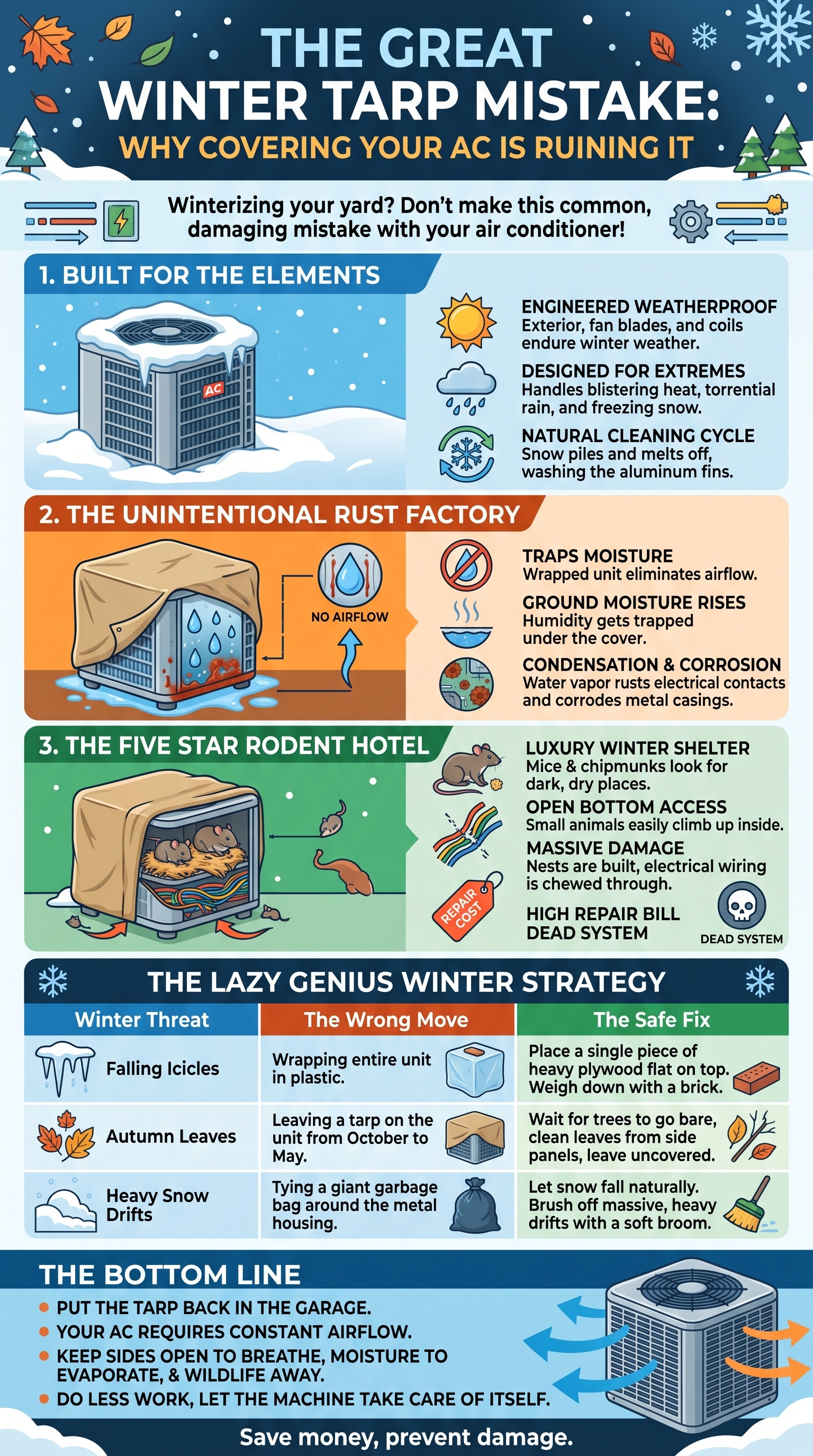
1. Built for the Elements
The metal box sitting outside your house is not a delicate electronic device. It was engineered by people who fully understand that winter weather exists. The exterior cabinet, the fan blades, and the internal aluminum coils are completely weatherproof. They are designed to endure blistering heat, torrential rain, and freezing snow.
Snow piling up on the unit will not hurt it. In fact, a heavy layer of snow melting off the machine in the spring acts as a gentle, natural cleaning cycle for the aluminum fins.
2. The Unintentional Rust Factory
When you wrap a condenser in a heavy plastic or canvas tarp, you block the snow, but you also completely eliminate the airflow. Ground moisture naturally rises, even in the dead of winter. If the machine is wrapped tight, that moisture gets trapped beneath the cover.
The water vapor condenses on the cold metal components and stays there all season long. You are actively creating a high humidity microclimate. Instead of protecting the machine, you are guaranteeing that the internal electrical contacts will rust and the metal casing will corrode.
3. The Five Star Rodent Hotel
Winter is brutal for field mice and chipmunks. They are desperately looking for a dark, dry place that blocks the bitter wind. When you wrap your condenser in a tarp, you just built them a luxury winter resort.
Small animals will easily climb up through the open bottom of the unit. Protected by your heavy tarp, they will build massive nests out of dead grass and spend the entire winter chewing through the expensive electrical wiring. When you pull the tarp off in the spring and try to turn the AC on, you will be greeted by a completely dead system and a massive repair bill.
The Lazy Genius Winter Strategy
If you live in an area with severe winter weather and simply cannot stand the idea of leaving the unit totally unprotected, you have to protect it smartly. You must block falling debris while keeping the sides entirely open to the wind.
| The Winter Threat | The Wrong Move | The Safe Fix |
| Falling Icicles | Wrapping the entire unit in plastic. | Place a single piece of heavy plywood flat on top of the fan grate. Weigh it down with a brick. |
| Autumn Leaves | Leaving a tarp on the unit from October to May. | Wait for the trees to go completely bare, clean the leaves out of the side panels, and leave the unit uncovered. |
| Heavy Snow Drifts | Tying a giant garbage bag around the metal housing. | Let the snow fall naturally. Brush off any massive, heavy drifts with a soft broom if you are worried about the sheer weight. |
The Bottom Line
Put the tarp back in the garage. Your air conditioner requires constant airflow, even when it is turned off for the season. Keep the sides completely open so the metal can breathe, the trapped moisture can evaporate, and the local wildlife is forced to find somewhere else to live.
Do less work this winter and let the machine take care of itself.